What Would Maple Syrup Be Without DE?
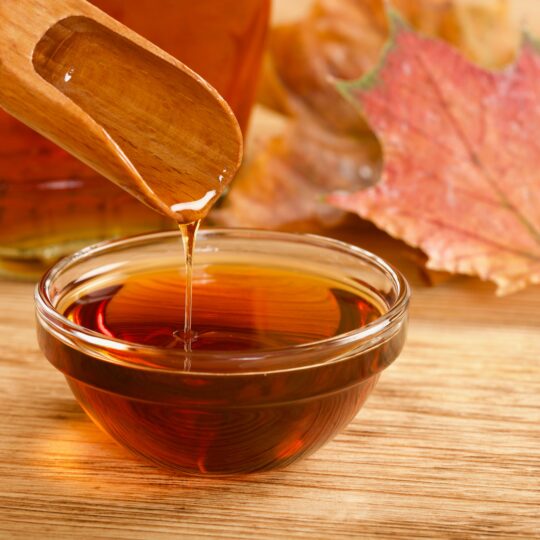
For those who enjoy rich, flavorful maple syrup, you may enjoy celebrating National Maple Syrup Day on December 17th. This annual honor commemorates the history and production of a naturally sourced product that enhances pancakes, French toast, and bacon. To fully appreciate the production process, you should know that maple syrup would not be the same without proper filtering. This is where diatomaceous earth (DE)—another natural wonder—should be honored for contributing to the quality of maple syrup.
How Maple Syrup is Produced
Maple syrup comes from the sap from maple trees. Trees are tapped in the early spring since sap typically flows better when temperatures are below freezing at night but above freezing during the day. A hole is drilled into the tree trunk or large branch for a spout to be inserted. The sap drips from the spout into a bucket or through a network of plastic tubes that transport it to a central tank.
While you can technically consume the clear, watery liquid raw, it’s always a good idea to help ensure any natural product is free of bacteria. That’s why sap goes through a boiling and filtering process. Not only does boiling make it safer to ingest, but it also concentrates the sweet flavor.
At first, maple sap only contains a trace amount of sugar, so it tastes like mineral water with a faint flavor. Maple sap contains nutrients and antioxidants including minerals like calcium and potassium. But it could also contain bacteria straight from the tree. A cloudy appearance or sour taste are some signs that it’s spoiled. It’s recommended to filter the liquid to remove debris and then boil it for at least a few minutes before cooling and drinking.
Maple sap can be used for more than syrup:
- As a marinade, it gives a hint of sweetness to meat and vegetables.
- Add it to coffee or tea for a natural sweetener.
- Use it in place of water when making oatmeal or baking bread.
But if you want to produce syrup, it should be boiled until excess water evaporates and the liquid thickens. The commercial process may look like this:
- Collected sap is transported to a sugar house and stored in a large tank.
- Sap is fed into a large, flat pan that is heated to boil the liquid until most of the water has evaporated.
- Natural sugars are concentrated during the process to develop the syrup’s flavor and color.
- The process is complete when the liquid reaches the right consistency, after which it is filtered.
This is where diatomaceous earth comes in.
How DE Improves Maple Syrup Production
Diatomaceous earth is introduced in the filtering stage to help remove impurities. Hot syrup is mixed with food-grade DE and then pumped through a filter press with paper filters. The DE acts as a filter aid, trapping tiny particles like natural salts and minerals on the filter papers. This results in clear, pure syrup that is then bottled for distribution.
Without diatomaceous earth, maple syrup would be cloudy and gritty from those concentrated minerals. While it would still be edible, its appearance and texture would not meet food safety regulations and standards for commercial sale. The leftover organic material could also cause the syrup to spoil quicker.
Using DE as a filter helps improve the syrup’s clarity and consistency. The more uniform product has a better chance of meeting the aesthetic standards for sale while also enhancing shelf life.
When it comes to enhancing your taste buds, celebrate National Maple Syrup Day by pouring some pure sweetness over your favorite foods. While you marvel over the mouthwatering goodness, take a moment to thank DE for helping to produce such a delicious delight.
Join Our Mailing List
Our blog offers insight and information about new and exciting uses for perlite, diatomaceous earth, and vermiculite deriving from years of research and application. From passive fire resistance to mineral depth filtration, by subscribing to our mailing list, you will receive the latest information surrounding the Dicalite, Dicaperl, and Specialty Vermiculite brands and products.